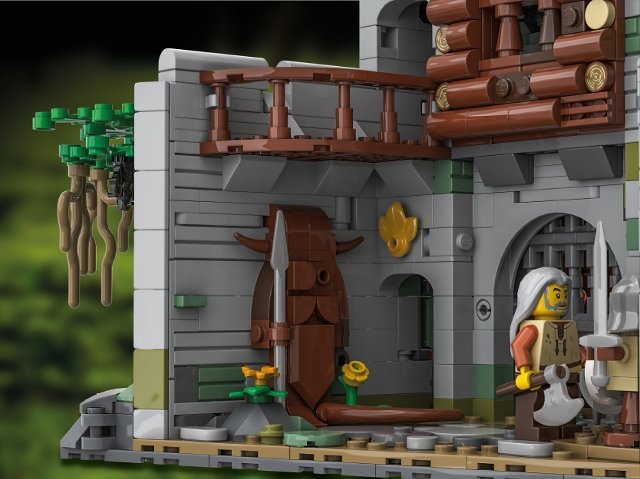
Embarking on a journey to craft a formidable Minecraft Viking fortress isn't just about placing blocks; it's about channeling the spirit of Norse legends, building a defiant stronghold against the elements and hostile mobs, and leaving your indelible mark on the landscape. If you've been dreaming of towering palisades, stout longhouses, and a bastion that would make a Jarl proud, understanding Minecraft Viking Fortress & Wall Schematics is your ultimate blueprint. These digital templates are more than just files; they're shortcuts to architectural greatness, allowing you to deploy intricate designs with precision and scale.
Whether you're a seasoned builder or looking to elevate your survival base, mastering the art of the Viking build, often powered by schematics, transforms your game from simple crafting to epic sagas.
At a Glance: Forging Your Nordic Masterpiece
- Schematics are your shortcut: Use them to instantly deploy complex Viking fortress components, saving hours of manual building.
- Strategic placement is key: Choose terrain wisely – hills, coasts, or choke points offer natural defense and authentic aesthetics.
- Walls are more than barriers: Learn to build layered, reinforced defenses with crenellations, murder holes, and sturdy gates.
- Embrace authentic materials: Dark oak, spruce, stone bricks, and deepslate capture the true Viking essence.
- Beyond the walls: Don't forget functional additions like longhouses, watchtowers, and resource-gathering areas.
- Tools are your friends: Programs like Litematica and WorldEdit are indispensable for working with schematics effectively.
- Draw inspiration: Community sites like Minecraft-Schematics.com and Pinterest offer a treasure trove of ideas.
The Call of the North: Why Viking Fortresses Dominate in Minecraft
There’s an undeniable allure to Viking architecture in Minecraft. It's a blend of raw, rugged strength and surprising detail, perfectly suited for the blocky world. A well-designed Viking fortress isn't just visually striking; it's inherently practical. Its heavy timber, stone foundations, and strategic layouts translate directly into robust defenses against creepers, zombies, and even player raiders in multiplayer servers.
Think about it: the Vikings were masters of fortification, creating settlements that were both homes and bastions. In Minecraft, this means a base that not only looks incredible but also provides maximum security, efficient resource management, and a powerful role-playing environment. From the imposing gates to the cozy, fire-warmed longhouses within, every element contributes to a sense of purpose and history.
Deciphering the Runes: What Are Schematics and Why You Need Them
In the realm of Minecraft building, a "schematic" is essentially a saved digital blueprint of a structure or a section of a build. These files (.schem, .litematic, etc.) capture the block-by-block layout of a creation, allowing you to import and paste it into your own world using mods or plugins. For complex builds like a full Viking fortress or even just an intricate wall section, schematics are an absolute game-changer.
Imagine spending hours meticulously building a perfect watchtower, only to realize you need five more just like it. Without schematics, that's five more hours of painstaking replication. With a schematic, you can simply load the blueprint and paste it multiple times, often with a few clicks. This is invaluable not just for speed, but for maintaining consistency and accuracy across a large project.
Your Digital Toolbox: Essential Mods for Schematic Use
To leverage schematics effectively, you'll need a few tools:
- Litematica: This is arguably the most popular and user-friendly client-side mod for working with schematics. It projects a "ghost" image of the schematic directly into your world, showing you exactly where each block should go. It's perfect for survival mode builders who want to place blocks manually but with a clear guide, and it can even pull materials from nearby chests for you.
- WorldEdit: A powerful server-side or single-player mod/plugin (depending on your setup) that allows you to perform large-scale edits to your world. WorldEdit is phenomenal for copying, pasting, rotating, and manipulating entire schematic builds quickly. If you're in creative mode or running your own server, WorldEdit makes deploying huge fortresses a matter of seconds, not hours.
- MCEdit (Legacy): While less common for newer versions of Minecraft, MCEdit was an external program used for editing worlds and importing schematics. It's largely been superseded by in-game solutions like WorldEdit and Litematica for active building.
Using these tools, you can explore the vast libraries available on sites like Minecraft Schematics, which, as its title suggests, is a prime hub for finding community-created builds to download. The site boasts nearly 20,000 creations, ensuring you'll find something to inspire your Nordic ambitions. You can find everything from small decorative elements to full-fledged fortresses ready for deployment.
Laying the Foundation: Designing Your Viking Fortress Layout
Before you even touch a block or load a schematic, the most critical step is planning. A Viking fortress isn't just a jumble of structures; it's a strategically planned settlement.
Choosing Your Terrain Wisely
The environment plays a massive role in both the aesthetic and defensibility of your fortress.
- Coastal Cliffs: Ideal for a dramatic, ocean-facing stronghold, complete with a functional dock for your longboats. Think about natural chokepoints and elevated positions.
- Mountain Peaks: Offers natural height advantage, making your walls less critical on one or more sides. Carving into the mountain can create a truly imposing structure.
- Forested Valleys: Provides ample wood resources and a more secluded feel. You'll need stronger perimeter defenses here.
- River Junctions: Can be used to create natural moats or define territorial boundaries, with bridges serving as controlled access points.
Consider the natural resources around your chosen site. Do you have access to stone, wood, and perhaps iron or coal nearby? A self-sufficient fortress is a powerful one.
Core Components of a Viking Stronghold
Every great Viking fortress needs specific elements. Think of these as modules you can build or import via Viking Minecraft schematics:
- Outer Walls & Palisades: The first line of defense. These should be imposing and difficult to breach.
- Main Gatehouse: The single most vulnerable point, thus requiring the most robust design.
- Watchtowers/Sentry Posts: Strategically placed along walls and at corners for optimal sightlines.
- The Jarl's Longhouse (Great Hall): The heart of your fortress, a place for feasting, leadership, and shelter.
- Barracks/Worker Houses: Living quarters for your inhabitants.
- Workshops & Forges: Essential for crafting tools, weapons, and armor.
- Storage Facilities: For all your collected treasures and resources.
- Courtyards & Open Spaces: For movement, training, and communal activities.
- Resource Areas: Small farms, animal pens, or logging areas within the walls.
The Unyielding Shield: Crafting Robust Viking Fortress Walls
The walls of your Viking fortress are its primary defense and often its most iconic feature. They need to look strong, be strong, and complement the natural environment.
Material Choices for Authenticity & Strength
Viking builders were practical, using what was available. In Minecraft, this translates to:
- Dark Oak & Spruce Logs/Planks: Excellent for palisade walls, watchtowers, and the timber frames of stone walls. Dark oak, in particular, offers a heavy, imposing look.
- Cobblestone & Stone Bricks: The bedrock of any good stone wall. Stone bricks offer a more refined, organized look, while cobblestone is raw and rugged. Mixing them adds texture.
- Deepslate (and variants): For a darker, more imposing, and modern-Minecraft touch, deepslate provides a fantastic, ancient-looking base for walls and foundations.
- Andesite & Granite: Can be used for textural variation within stone walls, simulating different rock types or repairs.
- Mossy Cobblestone/Stone Bricks: Excellent for conveying age and natural integration, especially around the base or in neglected areas.
Wall Archetypes: From Simple Palisades to Mighty Stone Bastions
- The Palisade Wall:
- Description: The simplest form, made from upright logs (often stripped logs for a cleaner look).
- Construction: Place logs vertically, 2-3 blocks high. You can add pointed tops using stairs or slabs.
- Enhancements: Double-layer for extra strength, reinforce with horizontal logs or small stone foundations at the base. Add walkways on the inside.
- The Timber-Framed Stone Wall:
- Description: A more advanced wall where stone forms the bulk, reinforced and detailed with heavy timber beams.
- Construction: Start with a stone base (cobblestone, stone bricks). Build up with stone, incorporating vertical and horizontal dark oak or spruce logs for structural support and aesthetic break-up.
- Defensive Features:
- Battlements & Crenellations: Alternating solid blocks and gaps at the top of the wall, allowing defenders to fire arrows while remaining partially covered. Use stairs and slabs for detailed crenellations.
- Walkways: Internal platforms along the top of the wall for defenders. Ensure they are wide enough (at least 2 blocks) for easy movement.
- Murder Holes: Gaps in the floor of an overhang or above a gate, allowing defenders to drop projectiles or pour liquids onto attackers directly below.
- Arrow Slits: Thin vertical openings in the wall, allowing archers to fire out while presenting a minimal target. Use fence gates, iron bars, or careful slab/stair placement.
- Machicolations: Overhanging structures on the wall with floor openings, similar to murder holes, but extending further out for wider coverage.
- The Double-Layered Wall:
- Description: Two parallel walls with a gap in between, often filled with spikes, lava, or simply to create a wider defensive zone.
- Construction: Build an inner and outer wall, leaving 2-4 blocks of space between them. The space can be a "death trap" or simply a second defensive line if the first is breached.
- Benefit: Provides incredible resilience and forces attackers to breach two obstacles.
Designing the Gatehouse: Your Fortress's Grand Entrance
The gatehouse is both a point of pride and the biggest vulnerability. It must be strong and defensible.
- Reinforced Materials: Heavy use of stone bricks, deepslate, and iron blocks (for decorative/strength purposes).
- Layered Defenses:
- Drawbridge: Often made with pistons and sticky pistons to retract a bridge, controlled via Redstone (even a simple lever system works).
- Portcullis: A heavy iron gate that drops vertically. Can be simulated with iron bars, fence gates, or actual Redstone-controlled piston doors.
- Killing Zone: The area directly in front of and within the gatehouse, designed to funnel attackers into a concentrated kill zone from above.
- Watchtower Integration: The gatehouse should always have built-in watchtowers on either side, providing overlapping fields of fire.
As you plan your walls, remember that understanding your Minecraft building materials and their properties will be crucial for both aesthetics and structural integrity.
Heart of the Hold: Constructing the Inner Keep & Essential Structures
Once your walls are planned, focus on the structures within. These are where your Viking saga truly unfolds.
The Jarl's Great Hall: A Longhouse for Legends
No Viking fortress is complete without a magnificent longhouse. This is the social, political, and literal heart of your settlement. Pinterest, for instance, offers a great visual example with a schematic of a Viking longhouse, showcasing how detailed these can be.
- Exterior:
- Shape: Typically long and narrow, with distinctive curved roofs.
- Materials: Primarily dark oak and spruce logs/planks for walls and roof, often with stone foundations. The roof can be made from stairs and slabs, giving a thatched or wooden shingle effect.
- Gables: Often decorated with intricate carvings or dragon heads (banners, custom heads, or detailed blockwork).
- Interior:
- Central Hearth: A large, open fire pit in the middle, smoke rising through a hole in the roof (or cleverly disguised chimney in Minecraft). This is the focal point.
- Feasting Tables: Long tables with benches running along the sides, crafted from stairs and slabs.
- Throne/Jarl's Seat: A prominent, richly decorated chair at one end.
- Sleeping Bunks: Simple beds or bunks along the walls.
- Storage & Display: Chests, item frames with weapons and shields, armor stands.
- Lighting: Torches, lanterns, and strategically placed campfires (for atmosphere and light) create a warm, inviting glow.
For more inspiration, you can find many detailed Viking longhouse designs online, ranging from simple survival shelters to grand, multi-room structures.
Beyond the Longhouse: Supporting Structures
- Barracks: Simple, efficient sleeping quarters for guards and warriors. Can be smaller longhouse-style buildings or multi-story structures.
- Workshops: Dedicated buildings for essential crafts:
- Blacksmith: Forge, anvils, grindstones.
- Carpenter: Crafting tables, fletching tables, log piles.
- Brewery/Kitchen: Cauldrons, barrels, smoker, blast furnace.
- Storage Houses: Large, secure buildings filled with chests, barrels, and shulker boxes for organizing vast quantities of resources.
- Animal Pens/Stables: For horses, cows, pigs, and sheep, often located near the outer walls or within a dedicated courtyard.
- Watchtowers & Lookout Posts:
- Integrated Towers: Built directly into the fortress walls at corners or along long stretches.
- Standalone Towers: Taller, often spiral-staircase structures providing broader views over the surrounding landscape. Ensure they have clear sightlines and easy access for defenders.
Connecting Pathways and Courtyards
Don't forget the spaces between buildings. Use pathways of cobblestone, gravel, or coarse dirt to connect your structures. Create courtyards for communal gathering, training, or simply to break up the density of buildings. These spaces are often overlooked but crucial for a fortress that feels alive and functional.
A Palette of Power: Materials and Aesthetics for Authenticity
The visual appeal of your Viking fortress hinges on your choice of materials and how you combine them. Authenticity in Minecraft comes from thoughtful block selection and texturing.
Primary Viking Building Blocks
- Wood (Dark Oak, Spruce, Oak): These are your workhorses. Dark oak gives a heavy, imposing feel; spruce is versatile and rustic; oak is brighter. Use logs for structure, planks for walls and floors, and stripped logs for cleaner details.
- Stone (Cobblestone, Stone Bricks, Deepslate, Andesite): For foundations, walls, and strong defensive elements. Mix them to add texture and break up monotony. Polished deepslate and its variants provide a sleek, dark strength.
- Roofing Materials: Dark oak planks, spruce slabs, mossy cobblestone or bricks, or even hay bales (for a thatched look) create varied roof textures.
- Decorative Elements:
- Lanterns & Torches: For light, both functional and atmospheric.
- Campfires: Great for smoke effects from chimneys, or as small heating points within buildings.
- Banners: Custom banners with Viking runes or symbols can add heraldry and color.
- Grindstones, Anvils, Stonecutters: These functional blocks double as excellent decorative details in workshops.
- Fences & Gates: For railings, smaller enclosures, and detailed wall tops.
Texturing and Detail Work
Avoid large, monolithic walls of a single block type. Instead:
- Mix Blocks: Alternate cobblestone with stone bricks, or different wood types.
- Add Layers: Use stairs, slabs, and walls to create depth and intricate patterns on flat surfaces. Think about window frames, door surrounds, and base moldings.
- Vary Height: Not every wall needs to be uniform. Add turrets, slightly higher sections, or battlements to break the skyline.
- Vegetation: Mossy blocks, vines, and even custom trees around the fortress can make it feel ancient and integrated with its surroundings.
Beyond the Palisade: Expanding Your Sphere of Influence
A true Viking settlement extends beyond its fortified core. Think about how your fortress interacts with the surrounding landscape.
- Docks and Harbors: If near water, a sturdy dock for longboats (or simple fishing boats) is essential. Include a small boathouse or repair area.
- Farms and Outposts: Small, defensible farms or logging camps outside the main walls can represent resource gathering. You might even want to consider custom Minecraft terrain generation if you're starting a new world, to create truly epic, Viking-friendly landscapes from scratch.
- Roads and Bridges: Simple dirt paths, or more elaborate cobblestone roads, connecting your fortress to these external points.
- Natural Defenses: Integrate rivers as moats, utilize high cliffs as natural walls, or strategically fell trees to create clear lines of sight.
Dragon's Roar and Raider's Bane: Pitfalls to Avoid & Pro-Tips for Builders
Building a massive Viking fortress is a rewarding challenge, but there are common traps. Here's how to steer clear and build like a seasoned Jarl:
Common Pitfalls
- Building on Flat Ground Only: While easier, it makes for a less dynamic and less defensible fortress. Embrace varied terrain.
- Neglecting Interiors: An amazing exterior but empty, bland interiors makes the fortress feel hollow. Plan your internal spaces as carefully as the outside.
- Monotony of Materials: Using only one type of stone or wood makes your build look flat and uninteresting. Mix and match!
- Poor Lighting: Dark areas inside or outside invite hostile mobs. Use ample light sources, both hidden and decorative.
- Ignoring Scale: A fortress should feel imposing, not cramped. Give yourself room to build big, but also ensure interior spaces are still functional and not ridiculously oversized.
- Forgetting Functionality: While aesthetics are important, a Viking fortress should also be a practical base. Consider storage, crafting areas, and mob-proofing. Many survival base ideas can be adapted for a Viking theme, focusing on efficiency alongside grandeur.
Pro-Tips for Aspiring Jarls
- Start Small, Expand Big: Begin with a main longhouse or a section of a wall, then progressively expand. Don't try to plan every single block of a massive fortress from day one.
- Use Reference Images: Look at historical Viking art, architecture, and even other Minecraft builds for inspiration. Pinterest and Minecraft-Schematics.com are excellent resources.
- Build in Creative First: If you're planning a massive survival build, consider doing a "mock-up" in creative mode. This allows you to experiment with designs, scale, and material combinations without resource constraints.
- Break Up Large Walls: Use buttresses, towers, changes in material, or decorative elements to add interest to long stretches of wall.
- Leverage Slabs and Stairs: These are your best friends for adding depth, texture, and intricate details that standard full blocks can't achieve. Think crenellations, roof overhangs, and custom furniture.
- Learn Basic Redstone: Even simple Redstone circuits can enhance your fortress, adding functional drawbridges, automated lighting, or secret doors. A deeper understanding of Redstone gate mechanisms can elevate your defenses considerably.
- Don't Be Afraid to Terraform: Modify the landscape around your fortress to make it fit better. Raise mountains, dig moats, or flatten areas for courtyards.
- Save Your Own Schematics: If you design a particularly cool watchtower or gate, save it as a schematic! You can reuse it in other worlds or share it with friends.
Questions from the Mead Hall: Common Queries Answered
"Can I build a Viking fortress entirely in survival mode?"
Absolutely! It's a massive undertaking, requiring vast amounts of resources (especially wood and stone), but entirely doable. Using Litematica in survival mode is incredibly helpful, as it guides your block placement and can even highlight missing materials from your inventory. It becomes a testament to your dedication and resourcefulness.
"How do I make my fortress look 'old' or 'weathered'?"
Use blocks like mossy cobblestone, mossy stone bricks, cracked stone bricks, and sometimes even dirt or coarse dirt blocks sparingly at the base of walls or in corners to simulate age and decay. Overhangs with stairs can create "drips" that look like water damage. Vines can also be strategically placed for an overgrown feel.
"What are some good defense strategies for a Viking fortress?"
Layered defenses are key. Start with an outer wall, then an inner wall or keep. Use height advantages. Implement murder holes, arrow slits, and a defensible gatehouse with multiple obstacles. Lighting is critical to prevent mob spawns inside your perimeter. Consider using natural chokepoints in the terrain.
"Where's the best place to find existing Viking fortress schematics?"
The go-to resource is Minecraft-Schematics.com, which hosts thousands of user-submitted schematics. Pinterest is also fantastic for visual inspiration, and many YouTube builders provide download links to their builds. Searching for "Viking Minecraft schematics" on these platforms will yield a wealth of options.
"How big should my fortress be?"
That depends on your ambition and the purpose. A survival single-player fortress can be smaller and more focused on efficiency. A multiplayer server stronghold might need to be truly massive to project power and house many players. Start with a footprint you feel comfortable with, and remember you can always expand outwards. A good rule of thumb: If it feels too small on paper, it's probably too small in Minecraft.
Your Next Great Saga Begins Now
Building a Minecraft Viking fortress is an epic journey, a creative endeavor that tests your patience, planning, and eye for detail. Whether you choose to meticulously place every block yourself or wisely leverage the power of Minecraft Viking Fortress & Wall Schematics, the reward is a breathtaking bastion that stands as a monument to your creativity.
So gather your resources, sharpen your pickaxe, and let the sagas of the North guide your hand. The blocks are waiting, and your legend is ready to be carved into the very landscape of your Minecraft world. Skål!