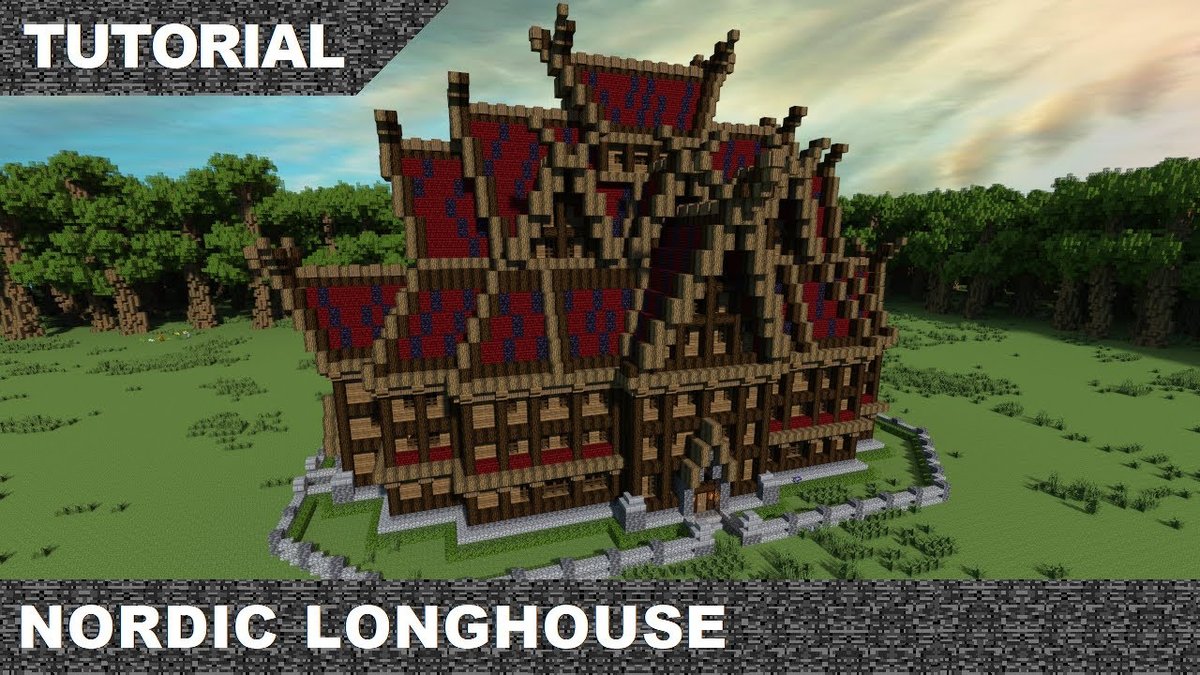
Ready to forge your own legendary Norse settlement in Minecraft? The allure of a sturdy, imposing Viking longhouse or a cozy, historically-inspired house isn't just about aesthetics; it's about crafting a functional, immersive base that stands the test of time (and creepers!). Understanding Viking Longhouse & House Schematics Minecraft empowers you to build with purpose, whether you're following a detailed blueprint or designing from scratch. Let's dive into the art and strategy of bringing the spirit of the North to your blocky world.
At a Glance: Building Your Viking Home
- Embrace Timber: Wood (spruce, dark oak, oak) is your primary structural material.
- Think Long & Narrow: Longhouses are characterized by their elongated, rectangular footprint.
- Roofs Matter: Steep, gabled roofs, often covered with dirt/grass or dark blocks, are authentic.
- Central Hearth: A fireplace is the heart of any Viking home and a key interior feature.
- Functional Interiors: Benches, sleeping platforms, storage chests, and crafting stations are essential.
- Schematics are Your Friend: Use existing blueprints for inspiration or direct implementation with mods.
- Detailing is Key: Banners, shields, carved accents, and exterior landscaping bring builds to life.
Why Viking Builds Dominate Minecraft Landscapes
From the rugged fjords to the sprawling plains, Minecraft players consistently gravitate towards Viking-inspired architecture. It’s more than just a passing trend; these builds offer a unique blend of robust functionality and timeless aesthetic appeal. Imagine a structure that feels both ancient and enduring, a testament to craftsmanship that shelters you from the elements and hostile mobs alike.
Viking longhouses, in particular, serve as ideal survival bases. Their large, open interiors offer ample space for all your crafting, storage, and agricultural needs, while their sturdy timber construction feels incredibly secure. For those seeking to craft a narrative, a Viking village provides an unparalleled backdrop for role-playing, grand expeditions, or simply enjoying the fruits of your building labor. It’s about building a home, yes, but also about building a legacy in your Minecraft world.
Decoding True Viking Architecture for Minecraft
Before laying a single block, understanding the core tenets of real-world Viking architecture can profoundly elevate your Minecraft builds. We're not aiming for perfect historical accuracy, necessarily, but rather capturing the spirit and defining characteristics.
Historically, Viking homes, especially longhouses, were practical structures built to withstand harsh northern climates. They were often:
- Rectangular and Elongated: Hence the "long" in longhouse, designed to house extended families, livestock, and communal activities under one roof.
- Timber-Framed: Wood was abundant, forming the primary structure. Walls might be wattle-and-daub, planked, or stacked logs.
- Turf or Thatch Roofs: Insulating and sustainable, often featuring steep gables to shed snow and rain. In Minecraft, this translates beautifully to dirt, grass, hay bales, or dark block palettes.
- Central Hearth: The literal and figurative heart of the home, providing warmth, light, and a place for cooking. Smoke typically exited through a vent in the roof.
- Simple, Robust Aesthetics: Functionality trumped ornate decoration, though some larger halls featured intricate carvings.
Translating these ideas into Minecraft means choosing the right blocks, understanding scale, and focusing on practical interior layouts. It means recognizing that a basic Viking house, much like those found on community platforms like CreateMod, often prioritizes these fundamental elements to deliver an authentic feel without excessive complexity.
Essential Minecraft Blocks for Your Viking Build
Selecting your material palette is crucial for achieving that distinct Viking look.
- Primary Structure (Walls & Frame):
- Spruce Wood: Dark, rustic, and reminiscent of conifer forests common in Nordic regions. Ideal for logs, planks, and stairs.
- Dark Oak Wood: Even darker, offering a more imposing, aged feel. Great for main beams, accents, or entire structures.
- Oak Wood: Lighter, but versatile. Can be mixed in for texture variation or used as a primary material in a more weathered build.
- Stone Bricks/Cobblestone: For foundations, hearths, or a mixed wall texture.
- Stripped Logs: Excellent for a clean, structural timber frame aesthetic.
- Roofing:
- Dirt/Coarse Dirt/Grass Blocks: For a realistic turf roof, especially effective on steeper slopes.
- Hay Bales: Can simulate thatch, especially when mixed with dirt.
- Dark Oak Slabs/Stairs: For a solid, dark wood roof.
- Spruce Slabs/Stairs: A slightly lighter wood roof option.
- Deepslate/Blackstone: For a very dark, stone-like roof, adding visual weight.
- Details & Interior:
- Campfires: The perfect central hearth (use trapdoors or carpet to cover smoke for a safer interior).
- Lanterns/Torches: Essential lighting.
- Chests/Barrels: Storage, naturally.
- Beds: Often placed on elevated platforms.
- Wool (various colors): For bedding, tapestries, or flags.
- Banners: Customize with patterns for clan symbols or decorative elements.
- Shields: Mounted on walls add character and a warrior feel.
- Fences/Gates: For pens, railings, or simple exterior adornment.
The Iconic Viking Longhouse: A Builder's Blueprint
The longhouse is the undisputed king of Viking architecture, and mastering its construction in Minecraft is a rewarding challenge. Let's break it down into manageable components.
External Design Principles
The exterior of your longhouse sets the tone. Aim for sturdy, imposing, and integrated with the landscape.
Dimensions and Scale
Think elongated. A typical Minecraft longhouse might be anywhere from 20 to 60 blocks long, and 9 to 15 blocks wide. Height will vary depending on your roof pitch, but aim for walls that are 4-6 blocks tall before the roof begins. Remember, these structures housed entire communities and animals!
- Foundation: Start with a strong base, often stone bricks or cobblestone, outlining your rectangular footprint. This adds visual weight and realism.
- Wall Structure:
- Log Cabin Style: Stack stripped logs (spruce or dark oak) horizontally for a solid, rustic look. Varying some logs with regular logs can add depth.
- Half-Timbered: Create a frame of vertical logs (e.g., dark oak) and fill the gaps with a contrasting material like planks, wool, or even mud bricks for a different texture. This offers more visual interest.
- Adding Depth: Don't make your walls flat! Push out window frames, add support beams, or vary the block type every few layers. Depth is key to making a Minecraft build look substantial.
The Signature Roof
A distinct, steeply sloped roof is critical for a convincing Viking longhouse.
- Pitch: Go for a steep pitch (e.g., 1 block up for every 1-2 blocks across) to give it that authentic profile and to shed snow effectively.
- Materials:
- Turf Roof: This is perhaps the most iconic. Build your roof frame with stairs and slabs, then layer dirt and grass blocks on top. You can even add a few tall grass or flower blocks for natural growth. This is great for blending into the landscape.
- Dark Wood Roof: Use spruce or dark oak stairs and slabs to create a consistent, dark timber roof. Add variations with regular wood blocks for texture.
- Ridge Cap: Often, a central ridge cap made of darker blocks or even decorative elements can run along the peak of the roof.
- Gable Ends: The triangular sections at the front and back of the roof can be filled with planks, logs, or even a small decorative window. Consider adding carved details using signs or item frames.
Entrances and Details
Keep entrances functional but visually appealing.
- Main Entrance: Typically a sturdy wooden door (spruce or dark oak) framed with logs. You might add an overhang or a small porch.
- Secondary Entrances: Smaller doors might lead to animal pens or workshops within the longhouse.
- Windows: Sparse and small in historical longhouses for insulation. In Minecraft, narrow windows (1x2 blocks) or simple slits with trapdoors work well.
- Exterior Accents:
- Banners: Customize banners with axe, raven, or ship motifs to hang by the entrance or on corners.
- Shields: Place shields on item frames along the walls.
- Dragon Heads/Carvings: For a truly grand longhouse, consider building custom dragon heads on the gable ends or using actual dragon heads from the Ender Dragon (if available in creative mode).
- Fences/Logs: Use fences as railings or stacked logs for firewood piles outside.
Internal Layout and Functionality
The interior of a longhouse is where practicality meets communal living. Think open plan, but with distinct zones.
The Central Hearth
This is non-negotiable. Place campfires in a line down the center of your longhouse. Ensure there's an open shaft directly above them, extending through the roof, to allow smoke to escape. You can cover the campfires with trapdoors or carpets if you want to walk over them safely, but keep the smoke shaft clear. This creates a cozy, warm, and well-lit central area.
Sleeping Arrangements and Benches
- Sleeping Platforms: Historically, people slept on elevated wooden platforms along the side walls. In Minecraft, build these 1-2 blocks high, topped with beds (wool blocks can serve as blankets).
- Benches: Simple wooden stairs or slabs make perfect benches flanking the central hearth, encouraging a communal feel.
Storage and Utility Zones
- Chests and Barrels: Line the walls under sleeping platforms or create designated storage alcoves. Barrels add a nice rustic touch.
- Crafting Stations: Place crafting tables, furnaces, smithing tables, stonecutters, and anvils in an organized manner. A dedicated "workshop" corner within the longhouse is common.
- Animal Pens: If you're building a true longhouse (byre-house), one end might be dedicated to livestock. Use fences to create stalls for sheep, pigs, or cows. Ensure separate entrances for humans and animals.
Lighting and Ambiance
Beyond the central hearth, strategically placed lanterns (hanging from ceilings or on walls) will brighten the space. Avoid over-lighting; a slightly dimmer interior can enhance the rustic, ancient atmosphere. Use item frames with maps to create "tapestries" on walls, or just hang plain banners for texture.
Want to see some excellent examples and perhaps even grab a pre-made design? You can explore Viking schematics for Minecraft that community builders have shared. These often come with material lists and step-by-step guides, saving you hours of planning!
Beyond the Longhouse: A Viking Village Ecosystem
While the longhouse is central, a vibrant Viking settlement includes a variety of other structures, each with a specific purpose. These smaller builds offer excellent opportunities to hone your skills and expand your design repertoire.
Smaller Houses and Huts
Not everyone lived in the grand longhouse. Many smaller, single-family dwellings would dot the landscape.
- Materials: Similar to longhouses, but often simpler construction.
- Size: Smaller footprint, perhaps 8x8 or 10x10 blocks, still with a steep roof.
- Purpose: Ideal for individual villagers, storage, or specialized workshops like a fletcher's hut or a small forge. These are great starter projects for a
basic Viking housedesign, much like the examples you might find on community build sites, credited to creators like "The Walking Whale" on YouTube.
Specialized Workshops
A self-sufficient village needs various craftspeople.
- Blacksmith: Stone walls, a large furnace area (use blast furnaces or regular furnaces), an anvil, and a water trough.
- Fisherman's Hut: Built near water, with docks, barrels for storage, and perhaps a small smoker.
- Fletcher/Bowyer: Lots of wood, fletching tables, and maybe some targets outside.
- Farmhouses/Barns: For crops and more livestock, often with hay bale roofs and fenced-in yards.
Defensive Structures
Even peaceful Vikings needed to protect their settlement.
- Watchtowers: Tall, sturdy timber towers at strategic points, offering views of the surrounding area. Ladders or spiral staircases for access.
- Palisades: A perimeter wall made of upright logs (fence posts or stripped logs) provides a first line of defense.
- Jarl's Hall/Great Hall: A grander, more ornate version of the longhouse, serving as a feast hall, assembly point, and residence for the chieftain. These are often the most elaborate builds in a village.
Navigating Schematics and Blueprints: Your Building Companion
For many Minecraft builders, especially those tackling ambitious projects like a comprehensive Viking longhouse, schematics are invaluable tools. But what exactly are they, and how do you use them?
What are Minecraft Schematics?
In Minecraft, a schematic is essentially a blueprint – a digital file that contains information about a specific build's blocks, their positions, and their data values. Think of it as a 3D snapshot of a structure. When loaded into Minecraft (usually with a mod like WorldEdit or Litematica), it can either paste the entire structure into your world, or overlay a ghost image that you can then follow block-by-block.
Finding and Using Existing Schematics
The Minecraft community is a treasure trove of shared builds. Websites like Pinterest often feature diagrams and screenshots, like a "Viking Longhouse! Minecraft Map" schematic you might find shared by creators, sometimes with direct download links. Other platforms, such as CreateMod, directly host schematic files for various builds, including more straightforward designs like a "Basic Viking House."
When looking for schematics:
- Check Compatibility: Ensure the schematic is for your Minecraft version.
- Review Screenshots: Look at images to see if the style and size fit your vision.
- Read Descriptions: Check for material lists, build time estimates, and any specific mod requirements.
To use a schematic:
- Install a Mod: You'll typically need WorldEdit (for pasting) or Litematica (for 'ghost' overlays to build manually).
- Place the File: Put the
.schemor.schematicfile into the correct folder within your Minecraft directory (usually.minecraft/schematics). - Load in-game: Use the mod's commands or interface to load and place the schematic. Litematica, for instance, projects a transparent image of the build, allowing you to place blocks precisely where they should go. This is incredibly helpful for complex builds.
Even if you prefer to build organically, browsing existing schematics can provide immense inspiration for layout ideas, material palettes, and unique detailing techniques. You can discover more Viking build blueprints and downloadable files by clicking to explore Viking schematics for Minecraft.
Reading and Adapting a Schematic
A good schematic will often come with a material list, detailing the types and quantities of blocks needed. If not, you'll learn to "read" the schematic's layers, understanding how it's constructed from the ground up. Don't be afraid to adapt! If a schematic uses a block you don't like or can't easily acquire, swap it out. A spruce roof can become a dirt roof, stone foundations can become cobblestone – make it your own.
Crafting Your Own Viking House: A Builder's Journey
While schematics are great, there's immense satisfaction in designing and building your own Viking home from scratch. Here’s a step-by-step approach to guide you.
1. Concept and Purpose: Define Your Vision
Before anything, decide what kind of Viking home you're building. Is it:
- A small, cozy starter home for a single player in survival?
- A grand, multi-functional longhouse as the centerpiece of a village?
- A specialized structure like a blacksmith or a watchtower?
This will dictate size, materials, and complexity. Sketching out a rough plan on paper or even in-game with dirt blocks can help visualize the footprint.
2. Site Selection: Choose Your Homeland
The location impacts the build's integration and overall feel.
- Flat Plains: Easiest for large, rectangular builds.
- Riverside/Lakeside: Perfect for a fishing hut or a longhouse with docks.
- Hillside/Mountain Base: Offers natural protection and dramatic views, but might require terraforming.
- Forest Edge: Provides immediate access to wood resources and blends naturally.
Consider the surrounding biome and how your build will interact with it.
3. Material Gathering: Stock Your Inventory
Building a substantial Viking longhouse requires a lot of wood. Prioritize:
- Logs (Spruce, Dark Oak): Hundreds, if not thousands, will be needed.
- Stairs and Slabs (matching wood): For roofs and interior details.
- Stone/Cobblestone: For foundations and hearths.
- Dirt/Grass: If you're planning a turf roof.
- Wool/Banners: For interior decor.
- Campfires, Lanterns, Chests: Essential utilities.
Start hoarding early!
4. Foundation and Frame: Laying the Groundwork
- Outline the Footprint: Use a contrasting block (like dirt or wool) to mark out the exact length and width of your build. This helps prevent mistakes.
- Build the Foundation: Replace your outline with a sturdy material like stone bricks or cobblestone. This defines the base.
- Erect the Corner Posts: Place vertical logs at each corner, extending to your desired wall height (e.g., 5-6 blocks tall).
- Create the Wall Frame: Connect the corner posts with horizontal logs or planks, establishing the general wall structure.
5. Walls and Roof: The Core Structure
- Fill the Walls: Choose your wall style (stacked logs, half-timbered) and fill in the spaces between your frame. Remember to add depth by varying blocks or pushing out sections slightly.
- Construct the Roof Frame: Begin with stairs at the bottom of your roof slope, gradually working your way up with layers of stairs and full blocks to create the desired steep pitch. Use slabs to fill in gaps or create a smoother underside.
- Apply Roofing Material: Once the frame is done, add your turf, wood, or other chosen roof material. Don't forget the smoke vent for your central hearth!
6. Interior Layout: Functionality First
- Place the Hearth: Install your campfires in a central line, ensuring the smoke shaft goes all the way through the roof.
- Define Zones: Use the space to create distinct areas for sleeping, cooking, crafting, and storage. Low walls (using fences or trapdoors) can subtly divide space without breaking the open feel.
- Build Platforms and Benches: Add sleeping platforms along the walls and benches around the hearth.
7. Detailing and Furnishing: Bringing it to Life
This is where your Viking home truly gains character.
- Exterior: Add fences, gates, carved logs (use signs or item frames for detailing), banners, and shields. Consider small details like an axe stuck in a log near the entrance, or a pile of firewood.
- Interior:
- Lighting: Strategically place lanterns.
- Tapestries/Furs: Use colored wool or banners on walls.
- Furniture: Craft tables, chairs (stairs/slabs), and bookshelves.
- Storage: Plenty of chests and barrels.
- Personal Touches: Armor stands with custom armor, weapon racks, or item frames displaying valuable tools.
8. Landscaping: Integration with Nature
A great build doesn't stand alone. Landscaping ties it to the environment.
- Paths: Create dirt or coarse dirt paths leading to and from your longhouse.
- Fences and Gardens: Small fenced-in garden plots or animal pens around the home.
- Custom Trees/Rocks: Add custom-built trees or natural-looking rock formations to enhance the surroundings.
- Terrain Blending: If your build is on a slope, ensure the foundation blends naturally into the terrain.
Building a complex structure like a longhouse can take time, and finding comprehensive guides orViking schematics for Minecraftthat are both detailed and easy to follow can be a game-changer. Don't hesitate to leverage community resources when you hit a creative block!
Common Pitfalls and How to Sail Past Them
Even seasoned builders can stumble. Here's what to watch out for when crafting your Viking masterpiece.
- The "Boxy" Build: A common trap. Flat, untextured walls make a building look lifeless.
- Fix: Add depth! Recess windows, use stripped logs for structural beams, vary your block palette every few layers, or add exterior buttresses.
- Lack of Roof Definition: A flat or shallow roof instantly kills the Viking aesthetic.
- Fix: Ensure your roof is steep and gabled. Use a mix of stairs, slabs, and full blocks to create texture and a realistic profile.
- Monotonous Material Usage: Using only one type of wood or stone can make a build bland.
- Fix: Mix different wood types (e.g., dark oak logs for frame, spruce planks for walls). Combine stone bricks with cobblestone, or add patches of mossy stone. Texture variety is your friend.
- Poor Lighting: Dark interiors are uninviting and dangerous in survival.
- Fix: Strategically place lanterns, torches, or even glowstone hidden behind trapdoors. Ensure your central hearth provides ample light.
- Ignoring the Context: Building a lone longhouse in a desert feels out of place.
- Fix: Choose biomes that complement the Viking theme (forests, tundras, snowy plains, coasts). Plan for surrounding elements like small farms, docks, or other huts to create a cohesive settlement.
- Over-reliance on One Design: Copying a schematic block-for-block without understanding its principles can limit your growth as a builder.
- Fix: Use schematics as a starting point. Understand why certain blocks are used, then experiment with variations. Learn from the examples, but make the build your own.
Advanced Tips for Master Builders
Ready to push your Viking builds to the next level? These techniques can add incredible depth and realism.
- Terraforming for Integration: Don't just build on the landscape; build into it. Use WorldEdit (or manual digging/placing) to create natural-looking slopes, valleys, and leveled ground that seamlessly integrates your longhouse into its surroundings.
- Custom Foliage and Rocks: Replace vanilla trees with your own hand-built, gnarled spruce or oak trees. Create custom rock formations using various stone blocks, moss, and vines. This adds immense character.
- Redstone Integration: For modern conveniences disguised as ancient tech. Think hidden doors behind tapestries, automatic lighting cycles with daylight sensors, or even a basic elevator disguised within a watchtower.
- Palette Variation and Texturing: Beyond just mixing wood types, experiment with combining different block sets for subtle texture. For example, using some stripped logs and some regular logs in a wall, or mixing stone bricks with cracked stone bricks and mossy stone bricks.
- Adding Lore and Story: Imagine the history of your longhouse. Who lived here? What events transpired? This can inspire unique details like a "worn" section of flooring, a hidden treasure chest, or specific banners depicting historical battles within your Minecraft world.
For inspiration on advanced architectural styles or complex internal layouts, don't forget to browse available Viking schematics for Minecraft. You might find a unique roof design or a clever storage solution that sparks your next big idea.
Frequently Asked Questions About Minecraft Viking Builds
What's the best wood for a Minecraft Viking longhouse?
Spruce and Dark Oak are generally considered the best. Their darker, more rustic textures strongly evoke the aesthetic of historical Viking timber construction. Oak can be used for lighter accents or more weathered builds, but for a true longhouse feel, lean into the darker woods.
How do I make a realistic turf roof in Minecraft?
Build your roof frame using wood stairs and slabs. Then, cover the entire frame with dirt blocks. Use a silk touch tool to gather grass blocks and place them strategically on the dirt to create a natural, overgrown look. You can also add coarse dirt, moss blocks, or even tall grass and flowers for extra detail.
Can I build a Viking longhouse in Minecraft Survival mode?
Absolutely! It's an excellent project for survival. The primary challenge is gathering the vast amount of wood, stone, and dirt. Start with a smaller "basic Viking house" to establish a base, then gradually expand into a full longhouse as you gather more resources. Plan out resource-gathering expeditions specifically for your build.
Are Viking schematics compatible with Minecraft Bedrock Edition?
Most .schematic files are designed for Java Edition and its associated mods (like WorldEdit, Litematica). Bedrock Edition has different file formats (like .mcstructure or .json for behavior packs). While you can't directly import Java schematics into Bedrock without conversion tools, you can use schematic images or video tutorials as visual guides to manually build in Bedrock.
How do I make the interior of my Viking house feel authentic and not empty?
Focus on functionality and communal elements. Include a prominent central hearth, sleeping platforms with beds and wool, long benches for gathering, and visible storage (chests, barrels). Add decorative elements like custom banners, shields on item frames, lanterns, and even animal furs (using brown or white wool). Don't leave large empty spaces; fill them with purpose.
What are some good resources for finding Viking longhouse schematics for Minecraft?
Websites like CreateMod.com (which hosts designs such as a "Basic Viking House" schematic, crediting popular YouTube creators like The Walking Whale), Planet Minecraft, and even image-sharing platforms like Pinterest are excellent places. Many YouTube builders also offer schematic downloads in their video descriptions. Always check the credits and ensure you have the right version of Minecraft for the schematic.
Your Journey to a Viking Stronghold Begins Now
Whether you're meticulously following a Viking Longhouse & House Schematics Minecraft blueprint or letting your creativity flow freely, the journey of building a Viking home in Minecraft is one of immense satisfaction. From the first log laid to the final banner hung, you're not just placing blocks; you're crafting a piece of history, a functional stronghold, and a beautiful testament to the enduring appeal of Norse design. So gather your resources, sharpen your pickaxe, and embark on your own epic building saga. Skål!