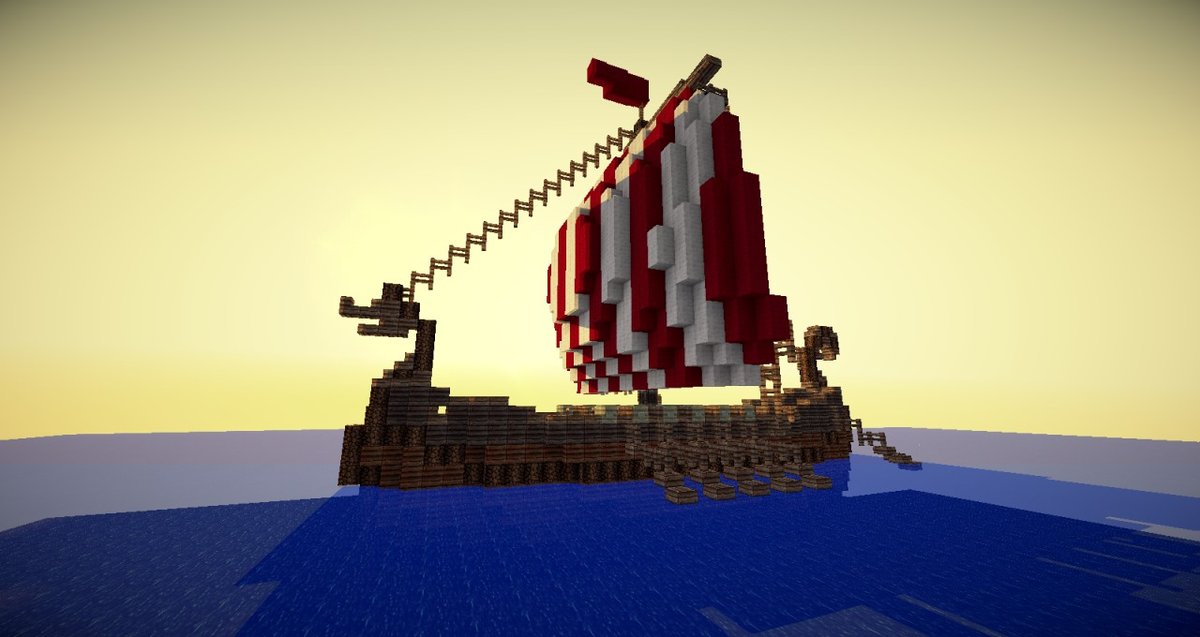
Ever dreamt of commanding the seas in your own blocky longship, sails billowing as you explore vast Minecraft oceans? Bringing these legendary vessels to life is a rite of passage for many builders, and getting it right often hinges on having the perfect blueprint. That's where Viking Ship Schematics Minecraft (Drakkar & Knarr) come in, transforming daunting construction into a satisfying, achievable voyage.
Whether you envision the sleek lines of a Drakkar warship or the robust utility of a Knarr cargo vessel, schematics provide the architectural guidance you need. Forget the frustration of starting from scratch; these digital blueprints are your key to unlocking truly epic Norse builds without the endless trial-and-error.
Your Viking Ship Journey: At a Glance
- Schematics are Game-Changers: Digital blueprints that simplify complex builds, saving you time and ensuring accuracy.
- Drakkar vs. Knarr: Learn the historical differences to choose the right ship for your Minecraft vision (warship vs. cargo).
- Essential Tools: Programs like MCedit, Litematica, or even Minecraft's own Structure Blocks are crucial for schematic deployment.
- Finding Blueprints: Reputable sites like Planet Minecraft and Minecraft-Schematics are treasure troves for high-quality designs.
- Beyond the Build: Integrate your ship into a larger Viking world, complete with docks and villages.
- Troubleshooting: Address common issues like water interaction, lag, and placement to ensure a smooth building process.
Why Set Sail with a Schematic? The Unsung Hero of Minecraft Builds
Imagine trying to build a complex, historically accurate structure like a Viking longship purely from memory, or by constantly referencing images in another tab. It's a recipe for frustration and countless hours of rework. This is precisely why schematics have become indispensable tools for the seasoned Minecraft builder. They're more than just fancy files; they're the architectural plans that bring grand visions into block-by-block reality.
Beyond Freehand: The Benefits of a Blueprint
A schematic file is essentially a snapshot of a pre-built structure, containing every block type and its exact coordinates. When you import one, you're not just getting an idea; you're getting a precise, digital replica. This drastically cuts down on build time, allowing you to focus on the broader narrative of your world rather than getting bogged down in minute details. For builders aiming for a truly impressive aesthetic, schematics provide a level of detail and structural integrity that's incredibly difficult to achieve freehand.
Accuracy and Scale: Getting it Right
Viking ships, particularly the iconic Drakkar and Knarr, are renowned for their distinct shapes and engineering. Mimicking these accurately in Minecraft requires careful attention to the hull's curve, the keel's depth, and the mast's placement. A well-made schematic ensures these proportions are correct, reflecting historical design principles within the game's blocky limitations. You can choose a design that's historically inspired or one that takes creative liberties, but either way, the schematic keeps the scale consistent and impressive.
Drakkar vs. Knarr: Choosing Your Norse Vessel
Before you dive into downloading files, it's worth understanding the two primary types of Viking ships you'll encounter in schematics: the Drakkar and the Knarr. While both are quintessentially Norse, they served vastly different purposes, and this difference translates directly into their Minecraft builds.
The Mighty Drakkar: Longship of War and Exploration
The Drakkar, or "dragon ship," is what most people picture when they think of a Viking vessel. These long, slender, and shallow-drafted ships were built for speed and agile maneuverability. They were the warships, the exploration vessels, and the raiding ships that carried Vikings across oceans and up rivers, striking fear into coastal communities.
Key Characteristics in Minecraft:
- Sleek Profile: Expect a longer, more elegant hull.
- Oars & Benches: Often features numerous oar holes and internal benches for rowers.
- Dragon Head Prow: The iconic carved dragon figurehead at the bow.
- Shields on Railing: Decorative shields often lined the gunwales.
- Single Square Sail: Typically a large, single mast with a square sail.
Building a Drakkar in Minecraft is about conveying power, swiftness, and a sense of formidable presence. They make excellent centerpieces for a Viking settlement or impressive vessels for adventure maps.
The Stout Knarr: Merchant of the Seas
In contrast to the Drakkar, the Knarr was the workhorse of the Viking fleet. These were wider, deeper-drafted ships designed primarily for cargo transport and long-distance trade. They were slower and relied more heavily on sails, with fewer oars (if any) used mainly for maneuvering in harbor. The Knarr facilitated the vast trade networks that connected Viking lands with the rest of Europe and beyond.
Key Characteristics in Minecraft:
- Broader Hull: A wider beam to accommodate more cargo.
- Deeper Keel: Reflects its deeper draft for stability in open water.
- Larger Hold: Often features a more substantial internal cargo area, sometimes with a deck covering part of it.
- Fewer Decorative Elements: Less ornate than a Drakkar, emphasizing function over intimidation.
- Single Square Sail: Similar sail setup to the Drakkar, but the ship itself is sturdier.
A Minecraft Knarr build is perfect for creating bustling port scenes, trading routes, or as a more practical ship for a survival world, perhaps even loaded with chests representing cargo.
Understanding the Differences: Build Implications
The choice between a Drakkar and a Knarr schematic isn't just aesthetic; it affects the scale of your project, the materials you might prioritize (e.g., more dark oak for warship intimidation, spruce for utilitarian cargo), and the overall atmosphere you're trying to create. A Drakkar demands attention with its aggressive lines, while a Knarr suggests industry and commerce.
Finding Your Blueprint: Where to Discover Viking Ship Schematics
With your vision clear, the next step is to actually acquire a schematic. Thankfully, the Minecraft community is incredibly generous, and there are several excellent repositories for high-quality builds.
Popular Repositories: Planet Minecraft & Minecraft-Schematics
The internet is awash with fantastic Minecraft creations, and for schematics, two sites stand out:
- Planet Minecraft: This is arguably the largest and most active hub for all things Minecraft. You'll find an enormous selection of Viking Minecraft Maps with Downloadable Schematic here, including a vast array of ships. Creators often provide multiple images, descriptions, and even video tours of their builds, giving you a comprehensive idea of what you're downloading.
- Minecraft-Schematics.com: As noted in our research, this site is a dedicated resource for schematics. It’s a bit more specialized, which can be a boon for finding exactly what you need. For example, you might find a "Viking Ship [Small]" schematic here, explicitly designed for use with tools like MCedit. These dedicated sites simplify the search for specific build types.
Community Creations: The Best of the Best
Many schematics are born from passionate builders sharing their work. Look for designs that have high ratings, many downloads, and positive comments, as these often indicate a well-crafted and functional schematic. You'll find everything from compact scout ships to elaborate large Viking ship Minecraft schematic designs that demand substantial space. Don't be afraid to browse and compare; the perfect ship is out there.
What to Look For in a Quality Schematic
Before you hit that download button, consider a few factors:
- Version Compatibility: Ensure the schematic is compatible with your Minecraft version.
- Block Palette: Does the schematic use blocks that you like and that fit your world's aesthetic?
- Scale: Is it the right size for your intended use? Some schematics are colossal, others quite modest.
- Interior Details: Does the ship have an interior, or is it just the hull?
- Complexity: Some schematics are incredibly detailed, which is great, but might require more resources or processing power from your game client.
Navigating the Build: How to Implement Your Viking Ship Schematic
Once you've secured your ideal Viking ship blueprint, the real fun begins: bringing it into your Minecraft world. This isn't as simple as drag-and-drop; you'll need specific tools to translate that digital file into tangible blocks.
Essential Tools: MCedit, Litematica, and Structure Blocks
The primary way to use schematics in Minecraft involves external tools or in-game mechanics designed for world editing.
- MCedit (Legacy but Powerful):
- What it is: A third-party world editor that allows you to open your Minecraft world file, import schematics, and manipulate blocks on a large scale.
- Pros: Highly versatile for large projects, powerful selection and filtering tools.
- Cons: Can be complex for beginners, often requires specific Minecraft versions, and development has slowed for newer versions of Minecraft. As the ground truth mentions, some schematics are designed for MCedit.
- Litematica (Modern & User-Friendly):
- What it is: A client-side mod that displays a "ghost" projection of your schematic directly in your game world. You then place blocks manually, guided by the projection.
- Pros: Works with modern Minecraft versions, excellent visual guidance, doesn't require exiting your world, great for survival builds where you gather resources.
- Cons: Requires Fabric or Forge mod loaders, still involves manual block placement (though guided).
- Structure Blocks (Vanilla Minecraft):
- What it is: An in-game block available in creative mode (
/give @s minecraft:structure_block). It allows you to save and load structures within your world or across different worlds. - Pros: Vanilla solution (no mods needed), great for smaller builds or transferring parts of a build.
- Cons: Has size limitations (typically 32x32x32 blocks), not ideal for importing large, pre-existing schematics from external sites without converting them first.
For most builders looking to import a downloaded Viking ship, Litematica is often the best balance of power and ease of use in modern Minecraft versions. If you're working with older versions or very large builds, MCedit might still be a go-to.
Step-by-Step: From Download to Deployment
Let's walk through the general process, focusing on Litematica as a common modern solution.
- Downloading Your Chosen Schematic:
- First, visit a reputable site like Planet Minecraft or Minecraft-Schematics.com. Use the search function to look for "Viking ship schematic," "Drakkar schematic," or "Knarr schematic."
- Once you've found a design you love, download the
.schemor.schematicfile. Keep an eye out for Minecraft Viking ship download options specifically tailored for different building tools. - Save this file in the appropriate schematics folder for your chosen tool (e.g.,
/.minecraft/mods/litematica/schematics/for Litematica).
- Loading into Your World:
- For Litematica: Once in your Minecraft world, open the Litematica menu (usually
M+L), select "Load Schematics," and pick your downloaded ship. You can then position the ghost projection of your ship using the placement tools. - For MCedit: Open MCedit, load your Minecraft world, and then use the "Import" tool to bring in your
.schematicfile. You can then move and rotate it. - For Structure Blocks: This usually requires converting an external schematic into a structure block-compatible format, or manually saving a small portion of a build. It's generally not the direct method for large, external schematics.
- Placing and Building:
- With Litematica: The ghost image will guide you, showing exactly where to place each block. You'll need to gather the necessary resources in survival mode, or access them in creative. This method is fantastic for learning how to construct a majestic Viking ship in Minecraft block by block.
- With MCedit: After importing, you essentially "paste" the schematic into your world. This is instant and ideal for creative mode or map making, as it places all blocks for you.
Materials Matter: Blocks for a Believable Build
The blocks you choose, or that are pre-selected in your schematic, significantly impact the ship's aesthetic.
- Hull: Dark Oak planks and logs, Spruce planks, or even Dark Prismarine can give a robust, weathered look. Stone bricks or Deepslate can be used for contrast or ballast.
- Deck: Spruce, Birch, or Oak planks create realistic deck textures.
- Mast: Stripped Spruce or Dark Oak logs are excellent.
- Sail: White wool, concrete, or even banners can represent the sail. Consider using different shades of gray or brown wool for a more weathered look.
- Dragon Head/Prow: Carved from Dark Oak, Crimson, or Warped blocks for menacing detail. Gold blocks can add a touch of regality.
- Shields: Item frames with custom banners or different colored terracotta blocks.
- Details: Lanterns, chains, pressure plates, and trapdoors add crucial small touches.
Crafting Authenticity: Design Considerations for Your Norse Masterpiece
A truly impressive Viking ship in Minecraft goes beyond simply placing blocks. It's about capturing the spirit and functional design of these ancient vessels. Even when using a schematic, understanding these elements allows you to appreciate the design and even make thoughtful modifications.
Hull Shape and Keel: The Foundation
The very core of a Viking ship's identity lies in its hull. It's not just a flat bottom or a simple curve. Norse shipbuilders mastered the art of elegant, clinker-built hulls (overlapping planks), which allowed for both strength and flexibility.
- Curved Keel: Viking ships famously had a shallow, curved keel that allowed them to be beached easily and navigate shallow waters. In Minecraft, this means the very bottom of your ship shouldn't be a straight line, but should gently arc upwards towards the bow and stern.
- Flared Sides: The hull sides typically flared outwards towards the waterline, providing stability and internal volume. Pay attention to how the schematic mimics this subtle yet crucial shape.
Mast and Sail: Capturing the Wind
The single, square-rigged sail was the primary propulsion for long-distance voyages.
- Sturdy Mast: Your mast should look strong enough to withstand ocean winds. Stacked stripped logs or iron blocks for reinforcement at the base are good choices.
- Square Sail: This is iconic. Use banners, wool, or concrete to create a large, rectangular sail. Consider adding details like ropes (leads, chains) to secure it to the mast and railings. Don't forget the yardarm (the horizontal spar that holds the top of the sail).
Shields, Dragon Heads, and Decorative Elements
These are the elements that transform a mere wooden boat into a fearsome Viking longship.
- Dragon Head Prow: The most recognizable feature of a Drakkar. This intricate carving often depicted a dragon or serpent and was believed to ward off evil spirits. Replicate this with careful block placement, using stairs, slabs, and even trapdoors to create texture and detail.
- Stern Ornamentation: While the bow had the dragon, the stern often featured a tail or a similar carved motif.
- Shields on Railing: Rows of colorful shields along the gunwales (sides of the ship) were both decorative and functional (though likely removed during battle). Use item frames with custom banners for a vibrant display.
Interior Design: Bringing Life to Your Ship
Many schematics focus on the exterior, but a truly immersive ship includes an interior.
- Deck Spaces: Depending on whether it's a Drakkar or Knarr, consider benches for rowers, a small captain's cabin, or open cargo holds.
- Storage: Chests, barrels, and shulker boxes can simulate provisions and cargo.
- Lighting: Torches, lanterns, or sea lanterns will illuminate the interior, preventing mob spawns and adding atmosphere.
- Sleeping Quarters: Beds or sleeping bags, even rudimentary ones, suggest a lived-in vessel.
Scale it Up or Down: Beyond Standard Sizes
While many schematics offer a standard ship size, don't hesitate to look for variations. If you're building a grand port or want to make a truly imposing statement, seeking out a large Viking ship Minecraft schematic can be incredibly rewarding. Conversely, for survival worlds or smaller builds, a compact design might be more appropriate. Remember, schematics are a starting point; you can always adapt or resize them (though resizing large builds can be complex).
Common Challenges and Smooth Sailing Tips
Even with the best schematics, building in Minecraft can throw a few curveballs. Knowing how to anticipate and tackle them will ensure your build goes smoothly.
Dealing with Water: Design vs. Functionality
As per our ground research, many schematics are purely for design, and the water shown in preview images is just for visual effect. This means:
- "Dry" Schematics: Most schematics assume you're building on land or in an empty space, and you'll need to dig out a basin for water after placing the ship, or fill around it.
- Waterlogging: If you paste a schematic into water, blocks might waterlog or be replaced by water, creating a mess. Use your schematic tool's options to handle water (e.g., replace water with air, or ignore water).
- Floating Illusion: To make your ship "float," ensure the waterline is clearly defined by your chosen hull blocks, and the water blocks are flush with your lowest deck.
Lag and Performance: Keeping Your Game Smooth
Large schematics, especially detailed ones, can put a strain on your game's performance, particularly when loading or rendering the ghost image with Litematica.
- Optimize Settings: Lower your render distance temporarily.
- Clear Cache: Some mod tools have cache clearing options.
- Build in Sections: If your schematic tool allows, try building a very large ship in smaller, manageable sections.
Troubleshooting Placement Issues
Sometimes, your schematic just won't sit right.
- Incorrect Coordinates: Double-check the X, Y, Z coordinates for placement. Y (height) is crucial for getting your ship at the correct water level.
- Rotation: Ensure the ship is facing the direction you want. Most schematic tools allow easy rotation.
- Collisions: If you're pasting a schematic over existing blocks, ensure your tool's settings are configured to either replace or merge blocks as intended.
- "Too Big": If you're using vanilla Structure Blocks for a large schematic, you might hit the size limit. This is where MCedit or Litematica become essential.
Beyond the Ship: Expanding Your Viking World
A magnificent Viking ship rarely stands alone. It's often the centerpiece of a larger narrative, a vital component of an entire world. Schematics aren't just for ships; they can help you flesh out an entire Norse-themed setting.
- Creating a Dock or Port: Your ship needs a home! Utilize natural coastlines or construct a grand pier. Think about boathouses, repair shops, and storage facilities. Incorporating other Viking builds in Minecraft around your port can bring the whole scene to life.
- Populating Your Village: A ship implies a community. Use Viking longhouse Minecraft schematics to quickly build residences, mead halls, and workshops. You can even find a comprehensive Minecraft Viking village schematic to drop an entire settlement into your world.
- Exploring Other Schematics: Don't stop at ships. Dive into the vast world of Viking schematics for Minecraft to discover forts, runestones, shrines, and even entire landscapes that can complement your naval endeavors. The possibilities for expanding your Norse empire are endless.
Your Questions Answered: Quick Facts for Aspiring Shipwrights
Got lingering questions about Viking ship schematics? Here are some rapid-fire answers.
- Are schematics considered cheating? In single-player creative mode, absolutely not. They're a building tool. In survival mode, using a mod like Litematica to guide a manual build is generally accepted. Instantly pasting a schematic in survival is usually considered cheating, but depends on your server's rules.
- Can I modify a downloaded schematic? Yes! Once imported, it's part of your world. You can add, remove, or change blocks to customize it. Many builders use schematics as a base, then personalize details like sails, dragon heads, or interiors.
- What are the best blocks for a Viking ship? Dark Oak and Spruce wood variants for the hull and deck provide authentic color and texture. Wool or concrete for sails, and terracotta or custom banners for shields. Gold and iron blocks can add regal accents.
- How long does it take to build a Viking ship with a schematic? Using MCedit, it's instant. With Litematica, it depends on the ship's size and your resource availability, but it's significantly faster than freehand, often taking a few hours for a detailed medium-sized ship.
- Where can I share my finished ship? Planet Minecraft is a popular platform. You can also showcase your builds on specialized Minecraft forums, Reddit communities, or even on the best Viking Minecraft servers that host creative builds.
Embarking on Your Epic Build: Your Next Steps to Constructing a Majestic Vessel
You're now equipped with the knowledge to bring the grandeur of Viking ships to your Minecraft world. From understanding the nuances of a Drakkar versus a Knarr, to navigating the practicalities of schematic deployment, you have a solid foundation.
Your next adventure awaits: find that perfect schematic, load up your favorite world, and begin the rewarding process of building. Whether you're aiming for historical accuracy or a fantastical interpretation, these digital blueprints will undoubtedly help you master the process of how to construct a majestic Viking ship in Minecraft and carve your own legend into the blocky seas. Happy building, and may your longship always find fair winds!